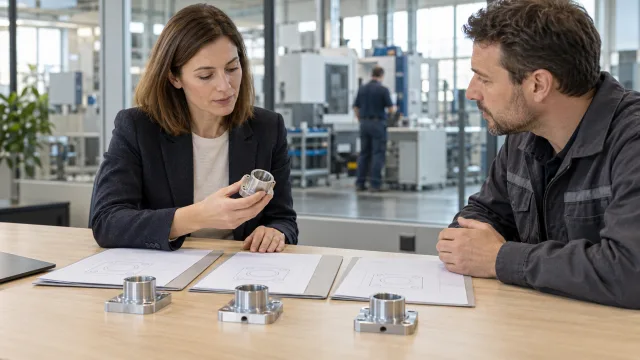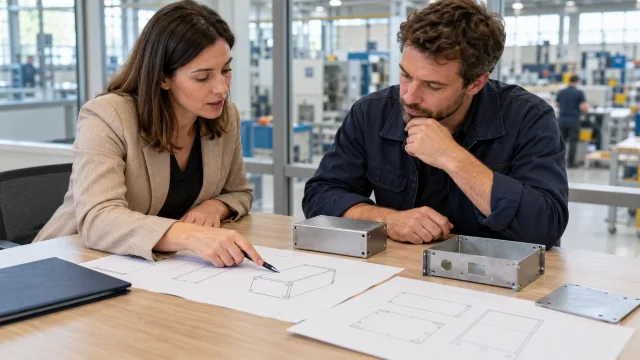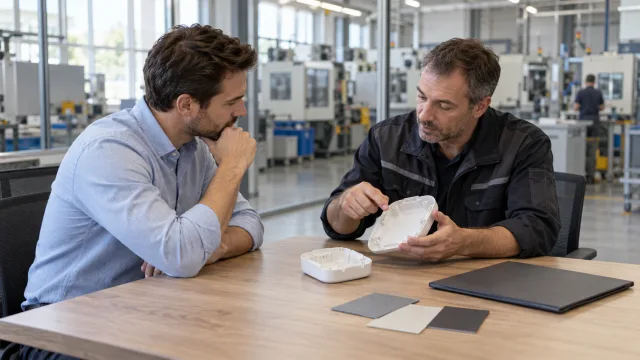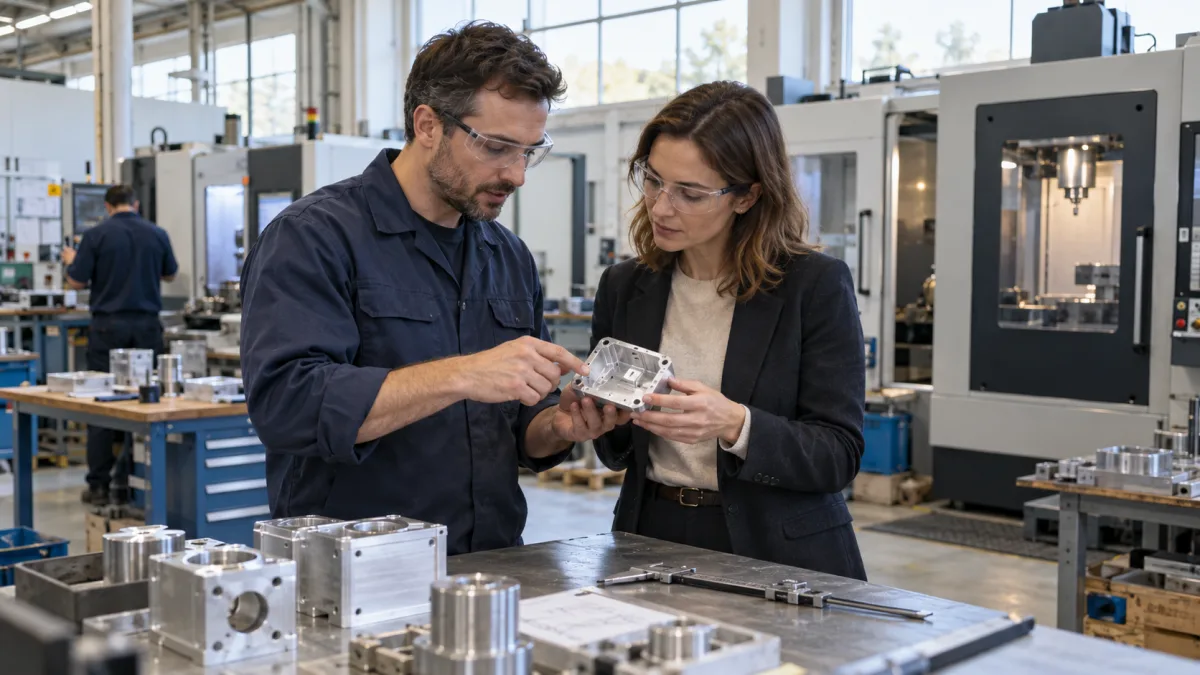
Finding a manufacturer in Europe can seem straightforward until you start looking. Search results mix factories with distributors, company websites use unfamiliar technical language, and a business that looks ideal may only accept orders far larger than yours. After a few hours, you can have dozens of open tabs without being much closer to choosing a production partner.
The search becomes easier when you work backwards from what you need made. A useful manufacturer is one that can produce your particular product, at the volume and quality you need, within commercial terms you can accept. Its location matters, but so do its equipment, experience, availability and willingness to work with a business like yours.
This guide explains how to turn a broad search for European manufacturers into a manageable shortlist, how to approach potential suppliers, and what to check before moving towards your first order. It applies whether you are sourcing custom components, developing a new product, looking for private label goods or replacing an existing production partner.
Start with a clear description of what you need made
Before searching for companies, write a short description of the work. You do not need a perfect technical specification to begin, but you do need enough detail to recognise whether a manufacturer could be suitable.
Describe the product, its intended use and the stage you have reached. Are you looking for someone to develop an idea, manufacture from finished drawings, assemble supplied components or adapt an existing product under your own brand? Those are different requests, and they may lead you to different businesses.
Include the material where it is known, approximate dimensions, required finish and any performance requirements. If you have drawings, photographs, a physical sample or a reference product, note what is available. Explain which details are fixed and which you would like the manufacturer to advise on.
Order volume deserves attention early. A factory that is an excellent choice for 50,000 identical parts may be unsuitable for 200. Give suppliers a realistic first-order quantity and, separately, an estimate of repeat demand. Avoid presenting hoped-for future sales as confirmed orders.
For example, “we need a metal parts manufacturer” leaves almost everything open. “We need 300 aluminium enclosures manufactured from our drawings, with a black surface finish and repeat batches expected later in the year” gives you a much more useful starting point. You can then establish the appropriate process and exact finish with potential suppliers.
Also consider where the finished goods will be used or sold. Relevant testing, documentation and traceability requirements should influence your search from the beginning, rather than appearing as a surprise after a supplier has quoted.
Understand which type of manufacturing partner you need
Not every company selling a product manufactures it. A distributor may hold stock from several factories, a trading company may arrange production through a network of suppliers, and a brand owner may outsource its entire product range.
There can be good reasons to work with any of these businesses. A distributor might offer smaller quantities and immediate availability. An intermediary might coordinate several production processes. The important point is to understand the arrangement and who will be responsible for the work.
If you already have a finished design, you may need a manufacturer that produces to your specification. If your idea still needs engineering work, look for a business offering product development, prototyping or design support alongside production. A factory focused on repeat manufacturing may expect you to arrive with drawings ready to use.
Private label manufacturing is another route. Here, you generally start with a supplier's existing product or formulation and agree branding, packaging or permitted modifications. This can be more practical than commissioning an entirely new design, although the degree of customisation varies.
Ask potential partners which operations they perform themselves and which they subcontract. Outsourcing a specialist finish or component does not automatically make a supplier unsuitable. You do, however, need to know who controls quality, manages subcontractors and resolves problems.
A direct question often saves considerable time: “Would you manufacture this at your own facility, and which parts of the work would be carried out elsewhere?”
Choose countries by practical fit
It is tempting to begin by asking which European country is cheapest. That can narrow your search too early. A lower quoted unit price may be outweighed by a larger minimum order, expensive transport, repeated revisions or a supplier whose equipment is poorly suited to your product.
Start with the capabilities you need, then compare locations. The useful question is whether a particular manufacturer offers the right combination of technical experience, workable quantities, delivery arrangements and overall cost.
Distance matters differently for different products. Bulky furniture, fragile goods and frequent small deliveries create different transport considerations from compact components shipped in occasional batches. If you expect regular factory visits or close collaboration during development, travel time may deserve greater weight.
Keep an open mind about company size and region. A smaller specialist outside a major industrial city may be a better fit than a well-known factory whose production model is built around much larger customers.
Be precise about your geographical requirement, too. “Made in Europe”, “manufactured in the European Union” and “supplied by a European company” do not mean the same thing. A European sales office does not establish where production takes place. If location is important to your customers, contract or sourcing policy, ask where the relevant manufacturing operations will happen.
If you have no fixed location requirement, begin with a few countries that appear practical for your delivery needs. Expand the search when the available suppliers do not match your process, volume or timetable.
Use several routes to discover potential manufacturers
A manufacturer directory provides a useful starting point because it lets you explore companies without relying entirely on which websites rank highest in a search engine. You can use LocalSuppliers.eu to begin researching European manufacturers, then visit individual company websites to investigate their capabilities and suitability.
Treat a directory profile as a lead for further research. Confirm the details that matter to your order directly with the company, especially its production location, current capabilities and willingness to accept your volume.
The Enterprise Europe Network's partnering opportunities database offers another route. Its listings include businesses seeking manufacturing, supplier and subcontracting partnerships. Read the proposed cooperation carefully: some companies are looking for distributors or technology partners rather than customers for manufacturing services.
Trade associations and chambers of commerce can help you discover businesses that are less visible in general search results. Look for organisations connected to the process or industry you need. Their membership directories may reveal relevant companies, although membership itself should not be treated as an endorsement of production quality.
Trade fair exhibitor lists are also worth exploring, even when you cannot attend. An exhibition focused on industrial subcontracting, packaging, textiles or furniture can introduce you to manufacturers whose websites you would not otherwise find. Check each exhibitor's role, since machinery sellers and service providers may appear alongside producers.
Recommendations from engineers, designers and existing suppliers can be valuable when they come from experience of similar work. Ask what the recommended company actually produced, at what scale, and how recently. A successful relationship in one product category does not automatically transfer to another.
Search by process and capability, not just product name
A broad search such as “European manufacturers” is useful for orientation, but it rarely produces a focused shortlist. More precise searches combine a manufacturing process, material or service with a location.
For a custom metal enclosure, you might explore sheet metal fabrication, laser cutting, bending and assembly. For a plastic housing, you might search for injection moulding or another suitable process. If you need electronic products assembled, searching for electronics manufacturing services or PCB assembly may reveal more relevant businesses than searching for the finished device alone.
Use the language manufacturers use to describe their work. Terms such as “contract manufacturing”, “precision machining”, “industrial sewing” and “private label production” can lead to different results from consumer-facing product names.
Local-language searches can widen the pool further. Try a translated process term alongside the country or region, then use browser translation to assess the results. Check unfamiliar technical terminology with someone who understands the process before relying on it in an enquiry.
If you do not know how your product should be made, avoid locking the search to a process too soon. A product designer or manufacturing engineer may help you identify suitable methods. You can also ask a potential supplier whether another process would better suit the design and expected volume.
When reading a website, look beyond its list of services. Examples of comparable work, materials handled, equipment information and inspection capabilities give you better questions to ask. A machine list is useful context, but it does not prove that the company has available capacity or experience of your particular requirements.
Build a shortlist that you can actually assess
Once the search starts producing results, record companies in one place. Otherwise, it becomes easy to contact the same business twice, confuse factories with sales offices or forget why a promising supplier caught your attention.
A simple spreadsheet is enough. Record the company name, website, manufacturing location, apparent capabilities and evidence relevant to your product. Leave space for confirmed quantities, lead times, contact details and questions that still need answers.
Distinguish what a supplier has confirmed from what you have inferred. “Website shows aluminium components” is different from “confirmed it can manufacture our aluminium enclosure”. This distinction keeps an attractive website from turning into an assumption about technical suitability.
Separate essential requirements from preferences. The correct process, a workable batch size and required quality controls may be essential. Being within a short drive or offering a particular payment term may be desirable. Apply that distinction consistently when deciding which companies to contact.
There is no universal number of manufacturers you must approach. As a practical starting point, a manageable group of around five to eight plausible companies can give you room to compare responses without creating an unmanageable task. Highly specialised work may leave you with fewer genuine options.
If none appears suitable, revisit the brief before sending more enquiries. The obstacle might be an unrealistic deadline, an uneconomic batch size or a design that needs further development.
Verify the company and the claims that matter
Before sharing sensitive designs or committing money, establish which legal entity you are dealing with. Request its registered name, registration number and relevant business addresses. Compare those details with its quotation, website and company records.
The European e-Justice Portal's company search resources can help you investigate businesses registered in the EU, Iceland, Liechtenstein and Norway. For companies elsewhere in Europe, use the relevant national register. Available information varies, so check what each record actually establishes.
A registration record helps establish identity. It does not prove that the business owns a factory, can make your product or will deliver successfully. Those questions require separate evidence.
Ask for examples of similar production, discuss the proposed manufacturing route and, where appropriate, arrange a video call or site visit. For a substantial or technically demanding order, an independent factory assessment may be worthwhile. The depth of checking should reflect the consequences of a failed order.
If a supplier claims certification, request the certificate and check its scope, covered site, issuing body and validity. IAF CertSearch provides a route for checking accredited management system certifications. If you cannot find or reconcile a record, follow up with the supplier and issuing certification body.
Keep certification in context. A management system certificate should not be treated as proof that your particular product meets its specification or every applicable product requirement. You still need to agree relevant testing, inspection and documentation.
Pause when important details do not match, when the supplier avoids reasonable questions or when payment instructions change unexpectedly. Confirm changes through a contact route you have already established, rather than relying solely on the message announcing them.
Send an enquiry that makes it easy to respond
A good first enquiry helps a manufacturer decide whether the project fits its business. It should describe the work clearly enough to invite a useful response without burying the important details in a long company introduction.
Explain what you need made, your first-order quantity, likely repeat demand, delivery destination and intended timetable. Mention available drawings or samples and highlight any essential material, finish or quality requirements.
For example: “We are looking for a manufacturing partner for an initial batch of 300 aluminium enclosures. Drawings are available, and we would like advice on the most suitable manufacturing route and black surface finish. Delivery would be to Lithuania. Could you confirm whether this type of work and quantity fit your capabilities, and what information you need to prepare a quotation?”
That gives the supplier a basis for discussion. If the design is ready, supply controlled drawings and identify their revision. If it is still being developed, say so and ask whether the company offers development support.
For confidential projects, begin with a description that does not disclose sensitive details. Discuss appropriate confidentiality arrangements before sending the information needed for a full technical assessment.
Send comparable information to each shortlisted supplier. When one company's question reveals an important omission, update the brief for the others. Otherwise, you may receive quotations based on different assumptions.
Assess the substance of the reply as well as its speed. A supplier that asks sensible questions about tolerances, material choice or expected use may be identifying issues that would otherwise become expensive later. Equally, leave reasonable time for a technical enquiry to reach the person who can assess it.
Compare quotations on the same basis
The cheapest number in your inbox may not represent the lowest cost of getting usable products delivered. Before comparing prices, check that every supplier has quoted against the same design revision, quantity, material, finish and quality requirements.
Establish what the price includes. A quotation may exclude tooling, development work, testing, packaging or freight. Another supplier may have included several of those items. Bring the quotations onto a common basis before deciding that one company is more expensive.
Separate one-off costs from recurring production costs. For illustration, a quote of €4 per part plus €2,000 in initial tooling totals €6,000 for 1,000 parts, before other charges. A quote of €5 per part with no initial tooling charge totals €5,000 for that same order. Repeat production could change the comparison, so consider realistic future volumes as well as the first batch.
Clarify what the lead time measures. It might begin after a deposit, drawing approval, material availability or sample acceptance. Ask when the goods would be ready to ship and what delivery time must be added. A short production estimate is not necessarily a short time to arrival.
Compare payment schedules, quotation validity and the handling of design changes. If tooling is required, establish ownership, maintenance, storage and what happens if you later move production.
Communication is part of the assessment. A supplier that documents assumptions and explains limitations makes it easier to manage the order. A vague quotation requires clarification before it can support a reliable decision.
Use samples or a first batch to test the relationship
Research and quotations help you choose whom to investigate further. They cannot fully demonstrate how a manufacturer will perform on your work. Where practical, use a sample, prototype, first article or controlled initial batch before committing to larger volumes.
Agree what you are trying to prove. A prototype may test shape and function while using a different process from eventual production. A production sample may help assess the intended materials, tooling and finish. Ask how the sample will be made and how representative it will be of repeat orders.
Define acceptance criteria before reviewing it. Check the relevant dimensions, finish, assembly, performance and documentation against the agreed requirements. For technically demanding products, you may need specialist inspection or testing rather than a visual assessment alone.
Record approvals and changes clearly. Keep the approved specification, drawing revision and reference sample identifiable. An informal “looks good” email leaves room for disagreement about what was actually accepted.
The initial order also tests how the company handles communication, packing, delivery and unexpected problems. A good sample is encouraging, but repeatability matters. Consider what you would do if the next batch were late, defective or unavailable.
You do not need to place orders with two factories immediately, but keeping an alternative supplier under consideration can reduce the work involved if circumstances change.
To begin your search, explore manufacturers on LocalSuppliers.eu with a clear product brief beside you. Use the directory to discover candidates, their websites to understand the offer, and direct conversations to confirm the details. The result should be a shortlist you can assess with evidence, rather than a collection of names.
Frequently asked questions
What is the best way to find manufacturers in Europe?
Start by defining your product, required capabilities and likely order volume. Use manufacturer directories, targeted searches, trade associations and exhibitor lists to identify candidates. Then confirm suitability directly and check the business before moving towards an order.
Which European country is best for manufacturing?
There is no single best country for every product. Compare individual suppliers on process capability, experience, quantity, quality requirements, delivery arrangements and total cost. Your product and commercial needs should guide the location search.
Can a small business work directly with a European manufacturer?
Yes, where the project fits the manufacturer's production model. Be clear about your actual quantity and development stage. Look for suppliers offering suitable batch sizes or development support, and expect tooling or setup costs to affect the economics of a small order.
How can I tell whether a company is a manufacturer or a reseller?
Ask where production takes place, which operations it performs itself and which it subcontracts. Check the answers against relevant company information, examples of work and, where appropriate, a site visit or factory assessment. A product catalogue alone does not establish that a company manufactures the goods.
Do I need technical drawings before contacting manufacturers?
Not always for an initial discussion. Photographs, dimensions, a reference sample and a clear description may help establish whether a supplier can assist. Accurate quotations and repeatable custom production usually need a more defined specification. Ask what information is required for your particular product.
How many manufacturers should I request quotations from?
Request quotes from a manageable number of genuinely suitable companies. Three comparable quotations can help reveal differences, but they are not a guarantee of a good choice. Specialist products may have fewer viable suppliers. Focus on fit and consistent specifications rather than collecting as many prices as possible.
Does manufacturing in Europe mean manufacturing in the EU?
No. Europe includes countries outside the European Union. Also, the location of a company's registered office may differ from its production location. If EU manufacturing is a requirement, state it clearly and confirm where your goods will be produced.
Should I choose the manufacturer with the lowest price?
Choose after comparing the complete offer. Include one-off charges, delivery, quality controls, payment terms and the consequences of delays or defects. A lower unit price is useful only when the supplier can deliver products that meet your requirements.
Does finding a manufacturer in a directory mean it has been verified?
A listing should be treated as a starting point for research unless the directory explicitly describes particular checks it has completed. Confirm the company's identity, capabilities, production location and suitability for your order yourself. Any verification should be understood according to its stated scope.